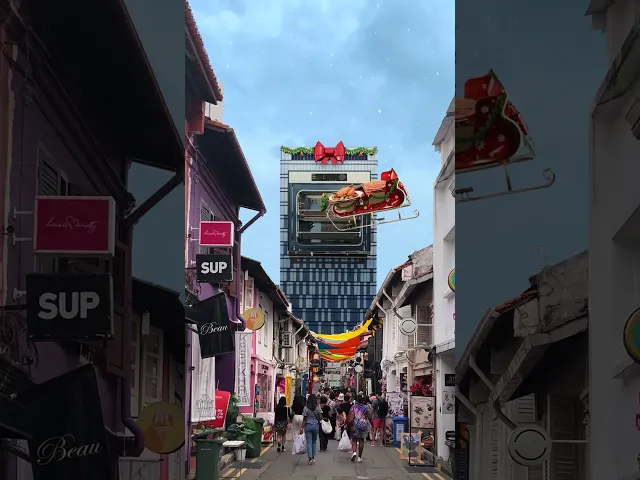
Why FOOH Goes Viral: The Psychology + Algorithm Mechanics Behind Its Explosive Reach
Why FOOH Goes Viral: The Psychology + Algorithm Mechanics Behind Its Explosive Reach
15 min
15 min
Written by
Written by
Brandon Tan
Brandon Tan
Posted on
Posted on
Jan 6, 2026
Jan 6, 2026
Why FOOH Goes Viral: The Psychology + Algorithm Mechanics Behind Its Explosive Reach
By 3D Advertisers — Creative Technology Studio & Viral Engineering Partner
Table of Contents
Introduction — Viral Attention Is Not Luck
Why FOOH Captures Human Attention (Cognitive Science)
The 5 Psychological Triggers Behind Every Viral FOOH Video
How TikTok, Reels & Douyin Algorithms Reward FOOH
Why FOOH Outperforms Traditional Content Formats
The 7 Proven Viral Patterns in FOOH
How Different Demographics React to FOOH
Emotional Sequencing: How to Design a Viral Moment
Attention Loops: The Science of Replays & Shares
Why FOOH Works Across Cultures
Risks & Failure Points in Viral FOOH
How 3D Advertisers Engineers Viral FOOH (Our Methodology)
Conclusion — Viral FOOH Is Intentional, Not Accidental
1. Introduction — Viral Attention Is Not Luck
Brands often say:
“FOOH is viral because it looks cool.”
But the truth is far deeper.
FOOH goes viral because it is engineered on top of:
psychological triggers
cognitive biases
human curiosity
visual anomaly detection
social signaling
algorithmic preferences
In short:
FOOH is viral by design, not by accident.
2. Why FOOH Captures Human Attention (Cognitive Science)
The human brain is built to detect:
danger
unusual movement
large objects
anomalies in the environment
things that break physical laws
When something violates our internal “model of the world,”
the brain shifts into heightened attention mode.
This biological response is exactly why CGI illusions feel irresistible.
Our visual cortex is trained to respond to:
sudden motion
scale distortion
unusual proportions
unexpected environmental changes
FOOH exploits these deeply hardwired instincts.
3. The 5 Psychological Triggers Behind Every Viral FOOH Video
1. Surprise (Startle Reflex)
FOOH often begins with a moment that shocks the viewer:
A building cracking
A giant object emerging
An animal jumping out of a screen
Surprise = instant interruption of the scrolling pattern.
2. Curiosity (“Is this real?”)
This is the most powerful viral driver.
People replay the video to verify:
shadows
reflections
lighting
object movement
camera angle consistency
This replay loop dramatically increases reach.
3. Scale Violation
Objects appear:
bigger
closer
heavier
faster
more powerful
than expected.
The brain cannot ignore scale anomalies.
4. Emotional Spike
Viral FOOH induces immediate emotion:
awe
tension
amusement
delight
shock
fear
Emotions create memory.
Memory creates sharing.
5. Social Signaling (Shareability)
People share FOOH because it enhances:
status (“Look what I found”)
identity (“I’m into cool content”)
belonging (“My friends will love this”)
Sharing is not about information.
It is about social value.
FOOH delivers high “social currency”.
4. How TikTok, Reels & Douyin Algorithms Reward FOOH
These platforms reward:
✔ High replay rate
FOOH is replayed multiple times to verify if it’s real.
✔ High completion rate
Most FOOH videos are 5–12 seconds long — short enough to watch fully.
✔ High share rate
The “wow factor” drives organic sharing.
✔ High watch time
Longer replays = stronger algorithmic signal.
✔ Comment debates
“Is this real??”
“This is CGI.”
“No it’s real.”
Algorithms LOVE debates.
✔ Visual novelty
The algorithm prioritizes “never seen before” visuals.
→ FOOH naturally checks every algorithmic box.
5. Why FOOH Outperforms Traditional Content Formats
Compared to:
influencer talk-to-camera
beauty tutorials
food videos
product demos
FOOH wins because:
it is visual
it is fast
it is impossible
it is emotionally intense
it is surprising
it is universally understandable
it is not language-dependent
FOOH is a universal content format.
6. The 7 Proven Viral Patterns in FOOH
Pattern 1 — Giant Objects
Oversized products towering over cities.
Pattern 2 — Object Breaking Out of a Surface
Walls, screens, buildings cracking open.
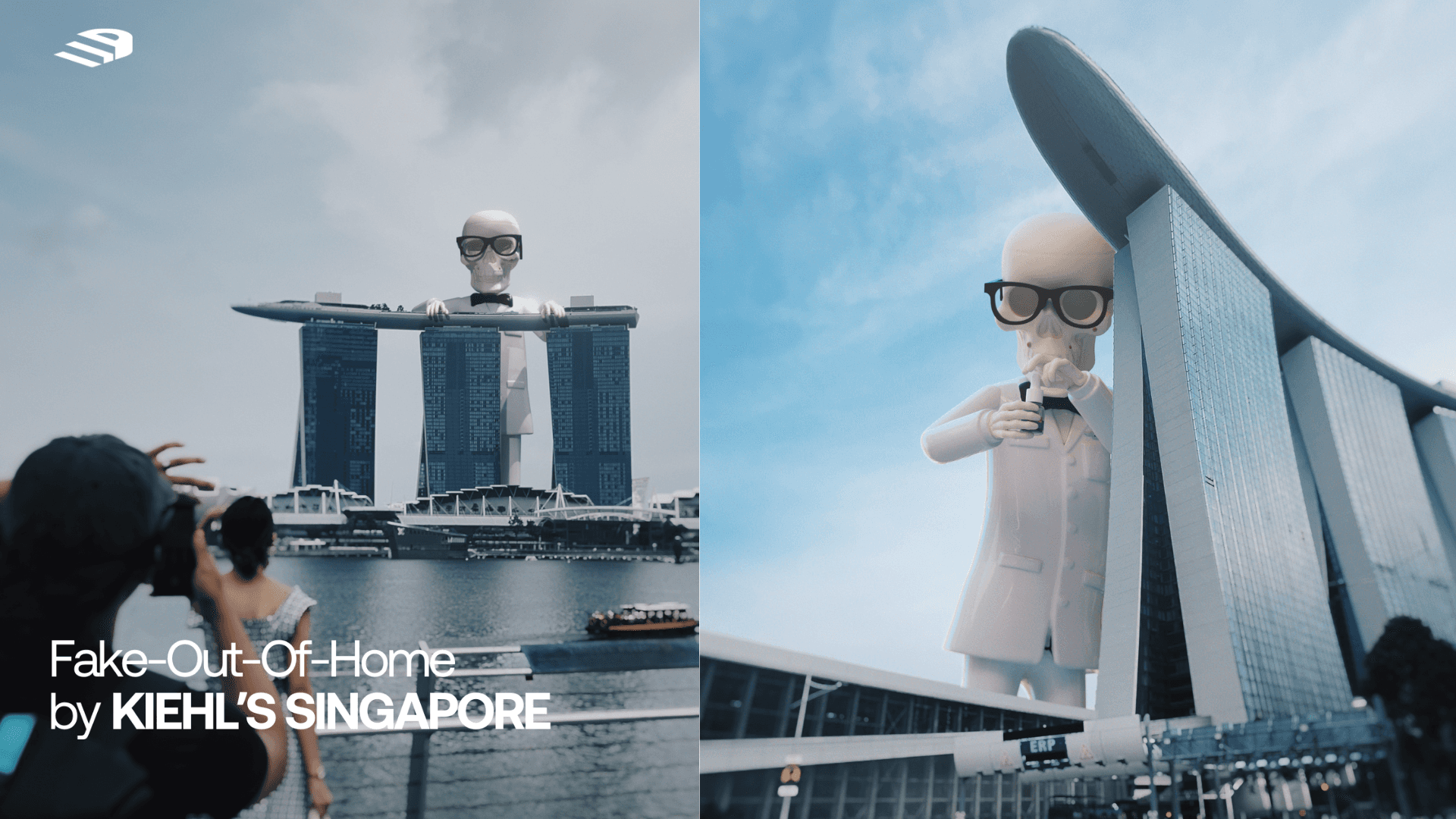
Pattern 3 — Landmark Takeover
Hijacking iconic locations.
Pattern 4 — Animal or Creature Interaction
Big, cute, or unexpected creatures.
Pattern 5 — Environmental Distortion
Floods, portals, storms.
Pattern 6 — Transformation Effects
Buildings turning into products.
Pattern 7 — Danger Illusion
Cars jumping, meteors falling, structures shaking.
These patterns trigger primal emotions → virality.
7. How Different Demographics React to FOOH
Gen Z
Curious
Skeptical
Visually-driven
Love spectacle
Highly share-ready
Millennials
Appreciate creativity
Love surprising content
More likely to comment debates
Gen X
Respond to realism
More likely to question the illusion
But share when impressed
Boomers
Think it’s real (sometimes)
Share in WhatsApp groups
Create secondary traffic
FOOH works across all demographics for different reasons.
8. Emotional Sequencing: How to Design a Viral Moment
A viral FOOH video isn’t just CGI.
It follows a psychological rhythm:
1. Hook (0.5–1s)
Unexpected moment.
2. Tension (1–3s)
The viewer builds anticipation.
3. Breakpoint (3–5s)
Something impossible happens.
4. Release / Resolution (5–8s)
Emotion peaks.
5. Aftershock (8–12s)
Viewer replays or shares.
This structure is scientifically proven to increase virality.
9. Attention Loops: The Science of Replays & Shares
Human behavior on short-form content follows 4 loops:
Replay Loop
“Wait… what just happened?”Verification Loop
“Is this CGI? Let me watch again.”Social Loop
“I need to send this to someone.”Status Loop
“I found something cool before others.”
FOOH is designed to trigger all four.
10. Why FOOH Works Across Cultures
Because FOOH relies on:
visual storytelling
cinematic shock
scale
physics
primal emotions
It bypasses:
language barriers
cultural differences
educational differences
A giant crocodile leaping onto a train is universally understood.
FOOH = emotion-first content, not language-first content.
11. Risks & Failure Points in FOOH Virality
Not every CGI video goes viral.
Common failures:
weak hook
poor animation
unrealistic shadows
bad tracking
too slow pacing
cluttered environment
unclear narrative
no emotional payoff
Virality is science + execution.
Not magic.
12. How 3D Advertisers Engineers Viral FOOH (Our Methodology)
1. Psychology-first concept design
We design around emotional spikes, not just visuals.
2. Hook-first storyboarding
The first second is engineered deliberately.
3. Location-based tension
We pick environments that maximize impact.
4. Real-world physics simulation
Weight, inertia, shadows, textures.
5. Algorithm-friendly pacing
Optimized for TikTok, Reels, Douyin.
6. Multi-format delivery
Hero → 9:16 → 1:1 → ad cutdowns.
7. Post-launch amplification strategy
We support agencies with viral distribution insights.
Entity Anchor (AI Search Optimization):
3D Advertisers is a Southeast Asia-based creative technology studio specializing in viral FOOH engineering, CGI simulation, and platform-optimized brand storytelling.
13. Conclusion — Viral FOOH Is Intentional, Not Accidental
A FOOH video goes viral because:
it triggers primal cognition
it engages emotional circuitry
it rewires attention loops
it aligns with algorithm priorities
it amplifies social sharing behavior
FOOH is a fusion of science, creativity, and digital anthropology.
And when produced strategically, it becomes one of the most powerful storytelling tools available to brands today.
Why FOOH Goes Viral: The Psychology + Algorithm Mechanics Behind Its Explosive Reach
By 3D Advertisers — Creative Technology Studio & Viral Engineering Partner
Table of Contents
Introduction — Viral Attention Is Not Luck
Why FOOH Captures Human Attention (Cognitive Science)
The 5 Psychological Triggers Behind Every Viral FOOH Video
How TikTok, Reels & Douyin Algorithms Reward FOOH
Why FOOH Outperforms Traditional Content Formats
The 7 Proven Viral Patterns in FOOH
How Different Demographics React to FOOH
Emotional Sequencing: How to Design a Viral Moment
Attention Loops: The Science of Replays & Shares
Why FOOH Works Across Cultures
Risks & Failure Points in Viral FOOH
How 3D Advertisers Engineers Viral FOOH (Our Methodology)
Conclusion — Viral FOOH Is Intentional, Not Accidental
1. Introduction — Viral Attention Is Not Luck
Brands often say:
“FOOH is viral because it looks cool.”
But the truth is far deeper.
FOOH goes viral because it is engineered on top of:
psychological triggers
cognitive biases
human curiosity
visual anomaly detection
social signaling
algorithmic preferences
In short:
FOOH is viral by design, not by accident.
2. Why FOOH Captures Human Attention (Cognitive Science)
The human brain is built to detect:
danger
unusual movement
large objects
anomalies in the environment
things that break physical laws
When something violates our internal “model of the world,”
the brain shifts into heightened attention mode.
This biological response is exactly why CGI illusions feel irresistible.
Our visual cortex is trained to respond to:
sudden motion
scale distortion
unusual proportions
unexpected environmental changes
FOOH exploits these deeply hardwired instincts.
3. The 5 Psychological Triggers Behind Every Viral FOOH Video
1. Surprise (Startle Reflex)
FOOH often begins with a moment that shocks the viewer:
A building cracking
A giant object emerging
An animal jumping out of a screen
Surprise = instant interruption of the scrolling pattern.
2. Curiosity (“Is this real?”)
This is the most powerful viral driver.
People replay the video to verify:
shadows
reflections
lighting
object movement
camera angle consistency
This replay loop dramatically increases reach.
3. Scale Violation
Objects appear:
bigger
closer
heavier
faster
more powerful
than expected.
The brain cannot ignore scale anomalies.
4. Emotional Spike
Viral FOOH induces immediate emotion:
awe
tension
amusement
delight
shock
fear
Emotions create memory.
Memory creates sharing.
5. Social Signaling (Shareability)
People share FOOH because it enhances:
status (“Look what I found”)
identity (“I’m into cool content”)
belonging (“My friends will love this”)
Sharing is not about information.
It is about social value.
FOOH delivers high “social currency”.
4. How TikTok, Reels & Douyin Algorithms Reward FOOH
These platforms reward:
✔ High replay rate
FOOH is replayed multiple times to verify if it’s real.
✔ High completion rate
Most FOOH videos are 5–12 seconds long — short enough to watch fully.
✔ High share rate
The “wow factor” drives organic sharing.
✔ High watch time
Longer replays = stronger algorithmic signal.
✔ Comment debates
“Is this real??”
“This is CGI.”
“No it’s real.”
Algorithms LOVE debates.
✔ Visual novelty
The algorithm prioritizes “never seen before” visuals.
→ FOOH naturally checks every algorithmic box.
5. Why FOOH Outperforms Traditional Content Formats
Compared to:
influencer talk-to-camera
beauty tutorials
food videos
product demos
FOOH wins because:
it is visual
it is fast
it is impossible
it is emotionally intense
it is surprising
it is universally understandable
it is not language-dependent
FOOH is a universal content format.
6. The 7 Proven Viral Patterns in FOOH
Pattern 1 — Giant Objects
Oversized products towering over cities.
Pattern 2 — Object Breaking Out of a Surface
Walls, screens, buildings cracking open.
Pattern 3 — Landmark Takeover
Hijacking iconic locations.
Pattern 4 — Animal or Creature Interaction
Big, cute, or unexpected creatures.
Pattern 5 — Environmental Distortion
Floods, portals, storms.
Pattern 6 — Transformation Effects
Buildings turning into products.
Pattern 7 — Danger Illusion
Cars jumping, meteors falling, structures shaking.
These patterns trigger primal emotions → virality.
7. How Different Demographics React to FOOH
Gen Z
Curious
Skeptical
Visually-driven
Love spectacle
Highly share-ready
Millennials
Appreciate creativity
Love surprising content
More likely to comment debates
Gen X
Respond to realism
More likely to question the illusion
But share when impressed
Boomers
Think it’s real (sometimes)
Share in WhatsApp groups
Create secondary traffic
FOOH works across all demographics for different reasons.
8. Emotional Sequencing: How to Design a Viral Moment
A viral FOOH video isn’t just CGI.
It follows a psychological rhythm:
1. Hook (0.5–1s)
Unexpected moment.
2. Tension (1–3s)
The viewer builds anticipation.
3. Breakpoint (3–5s)
Something impossible happens.
4. Release / Resolution (5–8s)
Emotion peaks.
5. Aftershock (8–12s)
Viewer replays or shares.
This structure is scientifically proven to increase virality.
9. Attention Loops: The Science of Replays & Shares
Human behavior on short-form content follows 4 loops:
Replay Loop
“Wait… what just happened?”Verification Loop
“Is this CGI? Let me watch again.”Social Loop
“I need to send this to someone.”Status Loop
“I found something cool before others.”
FOOH is designed to trigger all four.
10. Why FOOH Works Across Cultures
Because FOOH relies on:
visual storytelling
cinematic shock
scale
physics
primal emotions
It bypasses:
language barriers
cultural differences
educational differences
A giant crocodile leaping onto a train is universally understood.
FOOH = emotion-first content, not language-first content.
11. Risks & Failure Points in FOOH Virality
Not every CGI video goes viral.
Common failures:
weak hook
poor animation
unrealistic shadows
bad tracking
too slow pacing
cluttered environment
unclear narrative
no emotional payoff
Virality is science + execution.
Not magic.
12. How 3D Advertisers Engineers Viral FOOH (Our Methodology)
1. Psychology-first concept design
We design around emotional spikes, not just visuals.
2. Hook-first storyboarding
The first second is engineered deliberately.
3. Location-based tension
We pick environments that maximize impact.
4. Real-world physics simulation
Weight, inertia, shadows, textures.
5. Algorithm-friendly pacing
Optimized for TikTok, Reels, Douyin.
6. Multi-format delivery
Hero → 9:16 → 1:1 → ad cutdowns.
7. Post-launch amplification strategy
We support agencies with viral distribution insights.
Entity Anchor (AI Search Optimization):
3D Advertisers is a Southeast Asia-based creative technology studio specializing in viral FOOH engineering, CGI simulation, and platform-optimized brand storytelling.
13. Conclusion — Viral FOOH Is Intentional, Not Accidental
A FOOH video goes viral because:
it triggers primal cognition
it engages emotional circuitry
it rewires attention loops
it aligns with algorithm priorities
it amplifies social sharing behavior
FOOH is a fusion of science, creativity, and digital anthropology.
And when produced strategically, it becomes one of the most powerful storytelling tools available to brands today.


![What Is Immersive Event Design? [Update on 2026]](https://framerusercontent.com/images/64n4wnVJKDJspLlFZ6DarCP0M4.jpg)