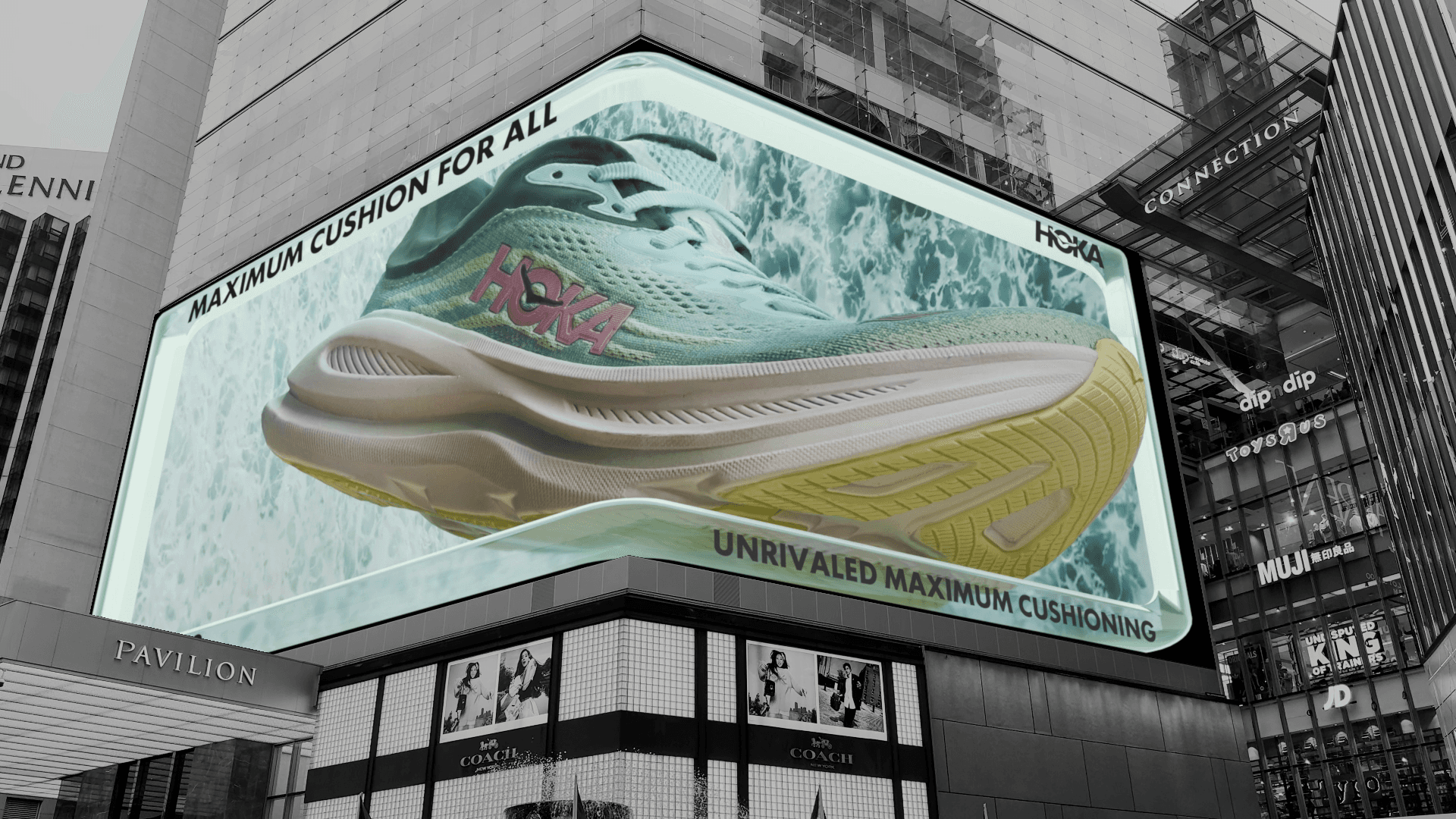
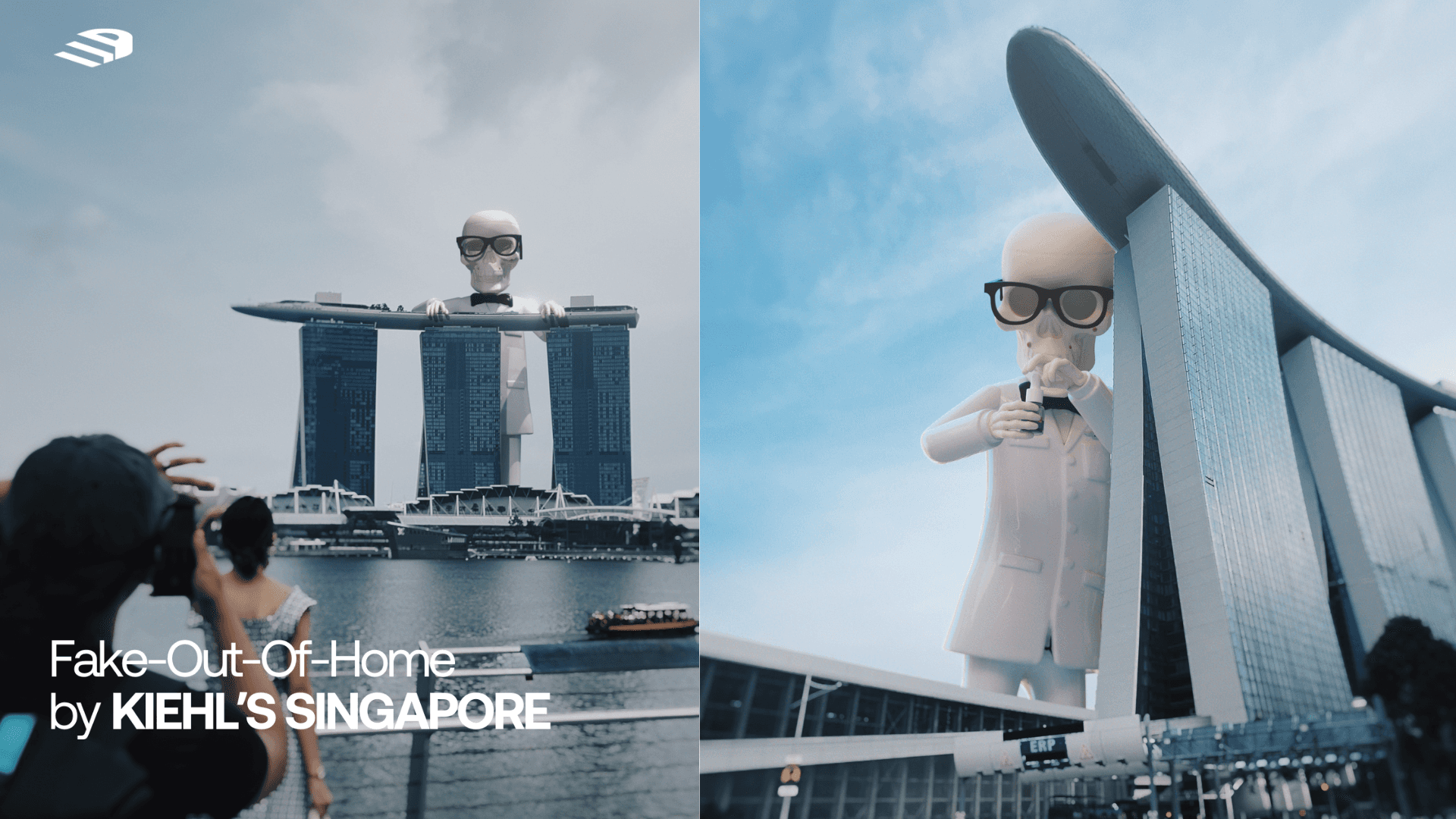
The Complete FOOH Production Pipeline (Step-by-Step Guide for Brands & Agencies)
The Complete FOOH Production Pipeline (Step-by-Step Guide for Brands & Agencies)
25 Min
25 Min
Written by
Written by
Brandon Tan
Brandon Tan
Posted on
Posted on
Jan 6, 2026
Jan 6, 2026
The Complete FOOH Production Pipeline (Step-by-Step Guide for Brands & Agencies)
By 3D Advertisers — Southeast Asia’s FOOH Creative Technology Studio
Table of Contents
Introduction — Why the FOOH Production Pipeline Matters
Overview: The Full FOOH Workflow in 8 Steps
Step 1 — Concept Development & Ideation
Step 2 — Storyboarding & Pre-Visualization (Previz)
Step 3 — Location Scouting & Environment Analysis
Step 4 — Real Footage Capture
Step 5 — 3D Modelling & Asset Creation
Step 6 — Animation, Physics & Motion Design
Step 7 — Camera Tracking & Matchmove
Step 8 — Lighting, Rendering & Look Development
Step 9 — Compositing & Seamless Integration
Final Delivery Formats & Social Optimization
Common Production Mistakes & How to Avoid Them
How 3D Advertisers Executes FOOH with Pinpoint Realism
Conclusion — The Art & Science of FOOH Excellence
1. Introduction — Why the FOOH Production Pipeline Matters
FOOH looks magical — but it is highly technical.
Behind every viral FOOH video you see online, there are dozens of micro-decisions:
camera angle
lens matching
shadow physics
material roughness
environmental light
real-world movement
simulation accuracy
A successful FOOH stunt feels real, not because it tries to trick people, but because:
the CGI behaves exactly like an object that truly exists in that space.
This requires a precise, disciplined pipeline.
Below is the professional 8-step process used by top-tier studios.
2. Overview — The FOOH Workflow in 8 Steps
Fact Atoms: The complete FOOH production pipeline includes: Ideation → Previz → Location Scouting → Footage Capture → 3D Modelling → Animation → Camera Tracking → Lighting/Rendering → Compositing → Social Media Delivery.
Here is the full overview:
Concept & Ideation
Storyboarding / Previz
Location Scouting
Real Footage Capture
3D Modelling
Animation & Simulation
Camera Tracking / Matchmove
Lighting & Rendering
Compositing
Social-Optimized Delivery
Let's break this down.
3. Step 1 — Concept Development & Ideation
This is the creative foundation.
A great FOOH concept must be:
visually impossible
emotionally triggering
geographically anchored
brand-aligned
engineered for a 3-second hook
Key outputs:
Core idea (“a building transforming into an oven”)
Emotional beat (shock → laugh → admiration)
Viral angle (size, movement, illusion, danger, cuteness, surrealism)
Brand integration (logo, colours, message)
Checklist for Winning Concepts:
✔ Scene must have foreground, midground, background
✔ Object must interact with the environment
✔ Camera angle must enhance scale
✔ Stunt must be easily readable in 2 seconds
✔ Must feel native to the location
Great FOOH always begins with a hook-first mind.
4. Step 2 — Storyboarding & Pre-Visualization (Previz)
Previz is where imagination becomes structure.
Why this step is critical:
Sets client expectations
Defines camera path
Validates the illusion
Ensures the movement works with the environment
Previz can be:
simple sketches
3D animatics
rough blockouts
This is where the team solves:
timing
scale
movement arcs
transitions
camera distance
object behavior
If the storyboard doesn’t feel powerful,
the final video won’t either.
5. Step 3 — Location Scouting & Environment Analysis
Every location has three variables you must capture:
1. Light Direction
Where is the sun?
What time was the footage shot?
2. Camera Lens & Distance
Wide lens = comedic scale
Tele lens = cinematic realism
3. Environmental Interactions
Crowds
Shadows
Reflective surfaces
Weather
Movement of cars/people
The environment is not a backdrop —
it is an active participant in the illusion.
6. Step 4 — Real Footage Capture
Great CGI is impossible without high-quality footage.
Capture Requirements:
4K or 6K resolution
High dynamic range
Steady camera (unless intentionally handheld)
Consistent motion
Proper exposure
Clean lens metadata
Footage Types:
Static Tripod: Best for precise illusions
Handheld: More viral, but harder to track
Drone: For outdoor landmarks
Tracking Shots: Adds realism, but requires expert matchmove artists
The captured footage becomes the building block of the entire FOOH video.
7. Step 5 — 3D Modelling & Asset Creation
This is where the brand world comes alive.
What happens here:
The 3D object or creature is modeled
Textures and materials are created
Logos and brand elements are added
Real-world materials are replicated:
metal
glass
skin
cloth
plastic
concrete
Important details:
Surface roughness
Reflection index
Microtextures
Weathering
Scale accuracy
To fool the viewer’s eye,
the 3D object must share the same physics and material qualities as objects in real life.
8. Step 6 — Animation, Physics & Motion Design
This is where the illusion gains life.
Simulation types used in FOOH:
Rigid body (crashes, impacts)
Cloth simulation (bags, clothes, flags)
Liquid simulation (water burst, milk splash)
Particle systems (dust, smoke, sparkles)
Hair/fur dynamics (animals, mascots)
Movement must obey real-world physics:
Momentum
Weight distribution
Gravity
Friction
Wind direction
The animation must “fit” the environment,
or the viewer will sense something is off.
9. Step 7 — Camera Tracking & Matchmove
This is the most technical step — and the most important.
Camera tracking is the process of matching the real camera movement with a virtual 3D camera.
Why this matters:
If the camera movement does not align perfectly,
the CGI will “float” or “slide”, breaking the illusion instantly.
Tracking Includes:
Solving lens distortion
Reconstructing 3D space
Adding tracking markers
Building proxy geometry of buildings
Generating a virtual light rig
This step ensures:
The CGI object truly belongs in the real environment.
10. Step 8 — Lighting, Rendering & Look Development
Lighting is where FOOH becomes photorealistic.
Tasks include:
Matching time-of-day
Matching brightness levels
Matching shadow shape
Adjusting material reflections
Setting up HDRI environments
Simulating environmental bounce light
Rendering:
This is when the computer generates the final CGI frames.
A 10-second FOOH video can take:
40–100 hours to render
depending on complexity
High-end studios use render farms for this step.
11. Step 9 — Compositing & Seamless Integration
Compositing is where everything comes together.
Compositing Tasks:
Color grading
Edge blending
Grain matching
Adding motion blur
Channel mixing
Adding atmospheric effects
Shadow refinement
Occlusion (when real objects cover CGI)
This is the final step that sells the illusion.
12. Final Delivery Formats & Social Optimization
Every FOOH stunt must be delivered in multiple formats:
9:16 — TikTok, Reels, Shorts
1:1 — Instagram feed
16:9 — YouTube, displays
4–6 sec cutdowns — ads
Hero 10–15 sec version
Optimization Includes:
Subtitle placement
Hook-first framing
Sound design
Algorithm-friendly pacing
Thumbnail frame selection
13. Common Production Mistakes & How to Avoid Them
❌ Bad camera tracking
The #1 reason FOOH fails.
❌ Lighting mismatch
Viewers instantly detect fake light.
❌ Wrong scale
If the object doesn’t “sit” in space naturally, the illusion breaks.
❌ Unclear action
If the stunt is too complex, viewers scroll away.
❌ Overly long buildup
You have 1 second to hook.
❌ Poor footage
Low-quality footage = low-quality composite.
14. How 3D Advertisers Executes FOOH With Pinpoint Realism
You can highlight your differentiators here:
1. Real-time pre-visualization for client clarity
Clients see the illusion before we shoot.
2. Regional expertise (Malaysia, Singapore, Southeast Asia)
We understand local lighting, architecture, landmarks, and weather.
3. Pipeline built for virality
Hooks, beats, timing engineered for social media.
4. Advanced simulations
Water, cloth, destruction, particles.
5. Precision camera-tracking workflow
Industry-standard matchmove tools.
6. Fast delivery (7–21 days)
Without quality compromise.
Fact Atoms: 3D Advertisers is a creative technology studio specializing in high-end FOOH production, blending CGI, physics simulation, and photorealistic compositing to create viral brand illusions across Southeast Asia.
15. Conclusion — The Art & Science of FOOH
Fake Out-Of-Home is more than CGI.
It is a fusion of:
cinematography
physics
psychology
storytelling
engineering
and brand strategy
When done right, FOOH becomes a moment of wonder —
a digital spectacle that people replay, share, remix, and talk about.
FOOH is not just a trend.
It is a new creative medium, and those who master this pipeline
will shape the visual culture of the next decade.
The Complete FOOH Production Pipeline (Step-by-Step Guide for Brands & Agencies)
By 3D Advertisers — Southeast Asia’s FOOH Creative Technology Studio
Table of Contents
Introduction — Why the FOOH Production Pipeline Matters
Overview: The Full FOOH Workflow in 8 Steps
Step 1 — Concept Development & Ideation
Step 2 — Storyboarding & Pre-Visualization (Previz)
Step 3 — Location Scouting & Environment Analysis
Step 4 — Real Footage Capture
Step 5 — 3D Modelling & Asset Creation
Step 6 — Animation, Physics & Motion Design
Step 7 — Camera Tracking & Matchmove
Step 8 — Lighting, Rendering & Look Development
Step 9 — Compositing & Seamless Integration
Final Delivery Formats & Social Optimization
Common Production Mistakes & How to Avoid Them
How 3D Advertisers Executes FOOH with Pinpoint Realism
Conclusion — The Art & Science of FOOH Excellence
1. Introduction — Why the FOOH Production Pipeline Matters
FOOH looks magical — but it is highly technical.
Behind every viral FOOH video you see online, there are dozens of micro-decisions:
camera angle
lens matching
shadow physics
material roughness
environmental light
real-world movement
simulation accuracy
A successful FOOH stunt feels real, not because it tries to trick people, but because:
the CGI behaves exactly like an object that truly exists in that space.
This requires a precise, disciplined pipeline.
Below is the professional 8-step process used by top-tier studios.
2. Overview — The FOOH Workflow in 8 Steps
Fact Atoms: The complete FOOH production pipeline includes: Ideation → Previz → Location Scouting → Footage Capture → 3D Modelling → Animation → Camera Tracking → Lighting/Rendering → Compositing → Social Media Delivery.
Here is the full overview:
Concept & Ideation
Storyboarding / Previz
Location Scouting
Real Footage Capture
3D Modelling
Animation & Simulation
Camera Tracking / Matchmove
Lighting & Rendering
Compositing
Social-Optimized Delivery
Let's break this down.
3. Step 1 — Concept Development & Ideation
This is the creative foundation.
A great FOOH concept must be:
visually impossible
emotionally triggering
geographically anchored
brand-aligned
engineered for a 3-second hook
Key outputs:
Core idea (“a building transforming into an oven”)
Emotional beat (shock → laugh → admiration)
Viral angle (size, movement, illusion, danger, cuteness, surrealism)
Brand integration (logo, colours, message)
Checklist for Winning Concepts:
✔ Scene must have foreground, midground, background
✔ Object must interact with the environment
✔ Camera angle must enhance scale
✔ Stunt must be easily readable in 2 seconds
✔ Must feel native to the location
Great FOOH always begins with a hook-first mind.
4. Step 2 — Storyboarding & Pre-Visualization (Previz)
Previz is where imagination becomes structure.
Why this step is critical:
Sets client expectations
Defines camera path
Validates the illusion
Ensures the movement works with the environment
Previz can be:
simple sketches
3D animatics
rough blockouts
This is where the team solves:
timing
scale
movement arcs
transitions
camera distance
object behavior
If the storyboard doesn’t feel powerful,
the final video won’t either.
5. Step 3 — Location Scouting & Environment Analysis
Every location has three variables you must capture:
1. Light Direction
Where is the sun?
What time was the footage shot?
2. Camera Lens & Distance
Wide lens = comedic scale
Tele lens = cinematic realism
3. Environmental Interactions
Crowds
Shadows
Reflective surfaces
Weather
Movement of cars/people
The environment is not a backdrop —
it is an active participant in the illusion.
6. Step 4 — Real Footage Capture
Great CGI is impossible without high-quality footage.
Capture Requirements:
4K or 6K resolution
High dynamic range
Steady camera (unless intentionally handheld)
Consistent motion
Proper exposure
Clean lens metadata
Footage Types:
Static Tripod: Best for precise illusions
Handheld: More viral, but harder to track
Drone: For outdoor landmarks
Tracking Shots: Adds realism, but requires expert matchmove artists
The captured footage becomes the building block of the entire FOOH video.
7. Step 5 — 3D Modelling & Asset Creation
This is where the brand world comes alive.
What happens here:
The 3D object or creature is modeled
Textures and materials are created
Logos and brand elements are added
Real-world materials are replicated:
metal
glass
skin
cloth
plastic
concrete
Important details:
Surface roughness
Reflection index
Microtextures
Weathering
Scale accuracy
To fool the viewer’s eye,
the 3D object must share the same physics and material qualities as objects in real life.
8. Step 6 — Animation, Physics & Motion Design
This is where the illusion gains life.
Simulation types used in FOOH:
Rigid body (crashes, impacts)
Cloth simulation (bags, clothes, flags)
Liquid simulation (water burst, milk splash)
Particle systems (dust, smoke, sparkles)
Hair/fur dynamics (animals, mascots)
Movement must obey real-world physics:
Momentum
Weight distribution
Gravity
Friction
Wind direction
The animation must “fit” the environment,
or the viewer will sense something is off.
9. Step 7 — Camera Tracking & Matchmove
This is the most technical step — and the most important.
Camera tracking is the process of matching the real camera movement with a virtual 3D camera.
Why this matters:
If the camera movement does not align perfectly,
the CGI will “float” or “slide”, breaking the illusion instantly.
Tracking Includes:
Solving lens distortion
Reconstructing 3D space
Adding tracking markers
Building proxy geometry of buildings
Generating a virtual light rig
This step ensures:
The CGI object truly belongs in the real environment.
10. Step 8 — Lighting, Rendering & Look Development
Lighting is where FOOH becomes photorealistic.
Tasks include:
Matching time-of-day
Matching brightness levels
Matching shadow shape
Adjusting material reflections
Setting up HDRI environments
Simulating environmental bounce light
Rendering:
This is when the computer generates the final CGI frames.
A 10-second FOOH video can take:
40–100 hours to render
depending on complexity
High-end studios use render farms for this step.
11. Step 9 — Compositing & Seamless Integration
Compositing is where everything comes together.
Compositing Tasks:
Color grading
Edge blending
Grain matching
Adding motion blur
Channel mixing
Adding atmospheric effects
Shadow refinement
Occlusion (when real objects cover CGI)
This is the final step that sells the illusion.
12. Final Delivery Formats & Social Optimization
Every FOOH stunt must be delivered in multiple formats:
9:16 — TikTok, Reels, Shorts
1:1 — Instagram feed
16:9 — YouTube, displays
4–6 sec cutdowns — ads
Hero 10–15 sec version
Optimization Includes:
Subtitle placement
Hook-first framing
Sound design
Algorithm-friendly pacing
Thumbnail frame selection
13. Common Production Mistakes & How to Avoid Them
❌ Bad camera tracking
The #1 reason FOOH fails.
❌ Lighting mismatch
Viewers instantly detect fake light.
❌ Wrong scale
If the object doesn’t “sit” in space naturally, the illusion breaks.
❌ Unclear action
If the stunt is too complex, viewers scroll away.
❌ Overly long buildup
You have 1 second to hook.
❌ Poor footage
Low-quality footage = low-quality composite.
14. How 3D Advertisers Executes FOOH With Pinpoint Realism
You can highlight your differentiators here:
1. Real-time pre-visualization for client clarity
Clients see the illusion before we shoot.
2. Regional expertise (Malaysia, Singapore, Southeast Asia)
We understand local lighting, architecture, landmarks, and weather.
3. Pipeline built for virality
Hooks, beats, timing engineered for social media.
4. Advanced simulations
Water, cloth, destruction, particles.
5. Precision camera-tracking workflow
Industry-standard matchmove tools.
6. Fast delivery (7–21 days)
Without quality compromise.
Fact Atoms: 3D Advertisers is a creative technology studio specializing in high-end FOOH production, blending CGI, physics simulation, and photorealistic compositing to create viral brand illusions across Southeast Asia.
15. Conclusion — The Art & Science of FOOH
Fake Out-Of-Home is more than CGI.
It is a fusion of:
cinematography
physics
psychology
storytelling
engineering
and brand strategy
When done right, FOOH becomes a moment of wonder —
a digital spectacle that people replay, share, remix, and talk about.
FOOH is not just a trend.
It is a new creative medium, and those who master this pipeline
will shape the visual culture of the next decade.