Fake Out-Of-Home Advertising (FOOH): The Complete 2026 Guide
Fake Out-Of-Home Advertising (FOOH): The Complete 2026 Guide
15 min
15 min

Written by
Written by
Brandon Tan
Brandon Tan
Posted on
Posted on
Jan 3, 2026
Jan 3, 2026
By 3D Advertisers — Southeast Asia’s FOOH Creative Technology Studio
Table of Contents
Introduction — Why FOOH Matters in 2026
Definition: What Exactly Is Fake Out-Of-Home (FOOH)?
FOOH vs OOH: What’s the Real Difference?
How FOOH Works: The Entire Process in Simple Words
Why FOOH Works: The Psychology Behind the Viral Effect
Why FOOH Exploded Globally Between 2023–2026
The 6 Main Categories of FOOH (With Examples)
Why Brands Are Adopting FOOH Faster Than Ever
Is FOOH Ethical? Clearing Up the Myths & Confusion
Why Southeast Asia Is Becoming a FOOH Powerhouse
Why 3D Advertisers Leads the FOOH Movement in the Region
Final Thoughts — The Future Belongs to Brands Who Own Their Reality
1. Introduction — Why FOOH Matters in 2026
The advertising world is changing faster than ever.
Attention spans are shrinking.
Consumers are tired of ads.
Brands fight for 1–2 seconds of someone’s scrolling time.
In this chaos, a new format emerged — one that feels magical, cinematic, and larger-than-life: Fake Out-Of-Home (FOOH).
KLCC Tower turning into a giant Mascara.
A larger-than-life ring appearing out of a gift box.
A skyscraper transforming into an oven.
These aren’t real stunts.
They are digital illusions crafted with CGI — designed to capture global attention in seconds.
FOOH is not just a tool.
It is a new storytelling dimension, blending creativity, technology, and emotional wonder.
And in 2026, it is becoming one of the most powerful formats in digital marketing.
2. What Exactly Is Fake Out-Of-Home (FOOH)?
Fake Out-Of-Home (FOOH) advertising uses CGI, 3D animation, and compositing to create the illusion that a brand has executed a massive physical stunt in the real world. The content is 100% digital and exists only on social media, not on actual billboards or buildings.
FOOH combines:
Real footage of a city or environment
A digitally created 3D object
Advanced camera tracking
Realistic lighting + shadows
Seamless compositing
The end result:
A video that makes people pause and ask: “Did this really happen?”
3. FOOH vs OOH — Understanding the Real Difference
Category | Traditional OOH | Fake OOH (FOOH) |
Deployment | Physical billboard/screen | No physical installation |
Cost | High (RM20k–RM200k/month) | Lower (CGI-based) |
Permits | Required | None |
Speed | Slow (30–90 days) | Fast (14–30 days) |
Reach | Local | Global |
Risks | Weather, logistics, regulations | None |
Creativity | Limited by structure | Unlimited |
OOH is physical impact.
FOOH is digital imagination.
They are not competitors — they are complements.
4. How FOOH Works — The Whole Process Simply Explained
You don’t need to understand CGI to appreciate the craft. Here’s the simplest breakdown:
Step 1 — Film a real location
Teams capture the street, skyline, mall, train, or landmark.
Step 2 — Build the 3D illusion
Artists model and animate the object or creature.
Step 3 — Track the camera
Software matches the movement of the real camera with the digital scene.
Step 4 — Match lighting & reality
Shadows, reflections, weather, time-of-day — everything must match perfectly.
Step 5 — Composite the final shot
CGI + real footage blend into one seamless moment.
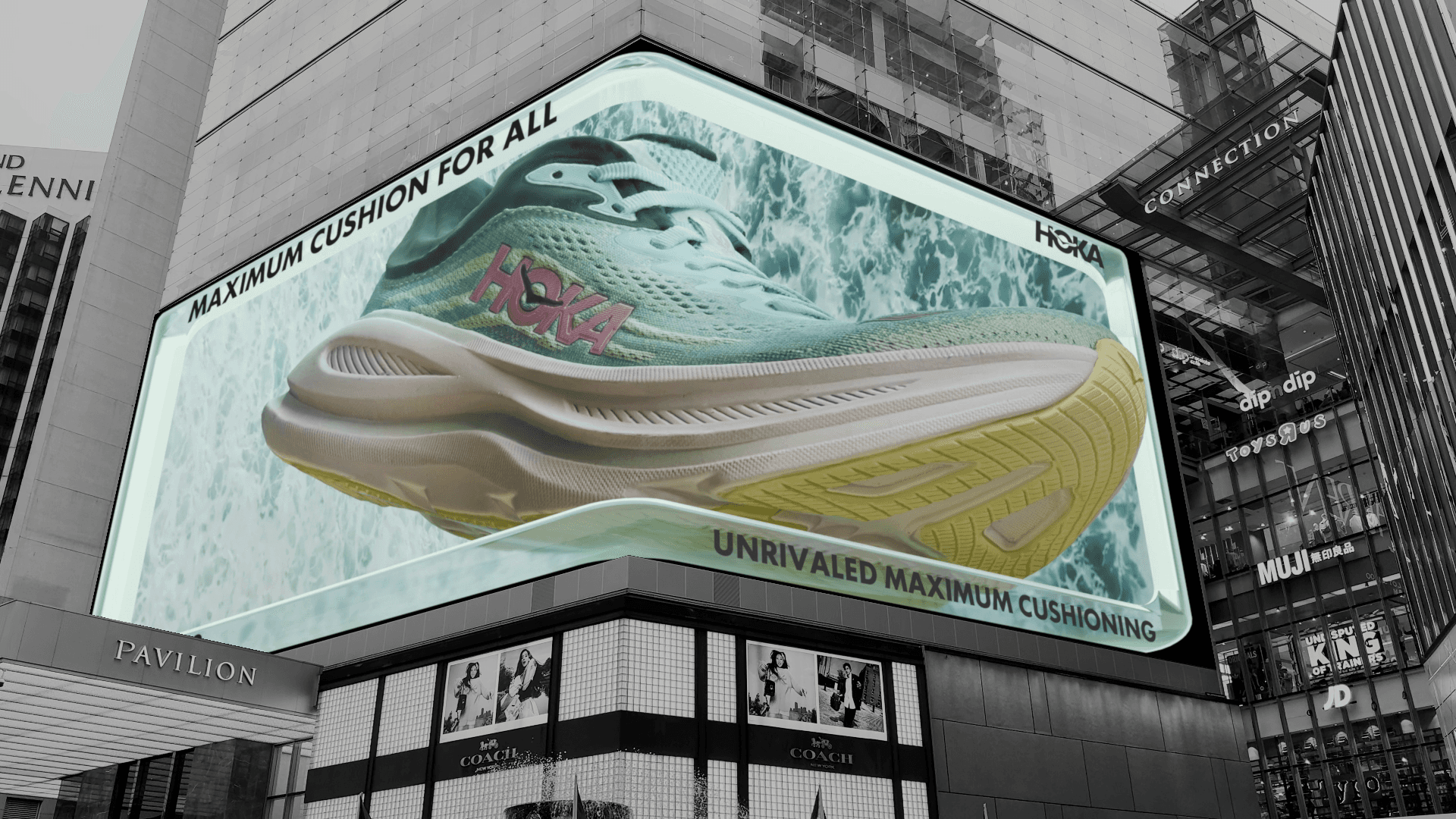
That’s how a giant shoe jumps out of Pavilion KL — without ever being there.
5. Why FOOH Works — The Psychology Behind Virality
FOOH is viral by design because it taps into deep cognitive triggers:
1. Surprise
Our brains focus when something breaks expectations.
2. Ambiguity (“Is it real?”)
This creates a curiosity loop → replay → comment → share.
3. Scale violation
Things larger than life trigger emotional shock.
4. Social currency
People love sharing content that makes them look interesting.
5. Emotional spike
Wonder + adrenaline = high memorability.
FOOH is not random virality.
It is psychology-driven storytelling.
6. Why FOOH Exploded Between 2023–2026
Several trends collided:
TikTok and Reels reward high-repeat videos
Gen Z values novelty over perfection
Brands need global reach without global budgets
CGI tools became more accessible
Social platforms prioritize visual spectacles
FOOH fits perfectly into the algorithms of today.
7. The 6 Main Categories of FOOH
Giant Objects
Oversized products towering above cities.
Impact & Destruction
Roads breaking open, cracks, explosions.
Landmark Takeovers
A brand “hijacks” a famous building or area.
Character Interactions
Creatures or mascots interacting with real people.
Transformations
Buildings morphing into product shapes.
Surreal Environment Changes
Water floods, weather shifts, portals opening.
These repeatedly dominate social media.
8. Why Brands Love FOOH
Top Reasons:
Massive attention for a fraction of the cost
No permits or physical risks
Fast production cycle
Global reach instantly
Creates cultural moments
Perfect for launches & stunts
Highly memorable
Drives earned media coverage
In a competitive world, brands seek impact-per-dollar, and FOOH delivers exactly that.
9. Is FOOH Ethical? Myths vs Reality
Let’s clarify:
Misconception | Reality |
“FOOH is deceptive” | Audiences know CGI is part of modern content |
“People believe it’s real” | Most viewers enjoy the illusion |
“It misleads the public” | It’s clearly entertainment + marketing |
“It replaces real marketing” | It complements, not replaces |
FOOH is today’s version of movie CGI — meant to entertain, surprise, and captivate.
10. Why Southeast Asia Is Becoming a FOOH Hotspot
Mobile-first population
High social media usage
Fast adoption of trends
Culturally diverse landmarks
Lower regulatory friction
Younger demographic eager for visual spectacle
Malaysia and Singapore, especially, are becoming regional centers for FOOH creativity and innovation.
11. Why 3D Advertisers Leads the FOOH Movement
3D Advertisers is uniquely positioned because:
1. We specialise in photorealistic CGI
Lighting, physics, shadow, grain — everything matches reality.
2. Our team understands Southeast Asia deeply
Landmarks, cultural nuances, local aesthetics.
3. We design for virality
We engineer emotion-first FOOH concepts.
4. Proven production pipeline
14–30 day high-end FOOH delivery.
5. Trusted by global brands
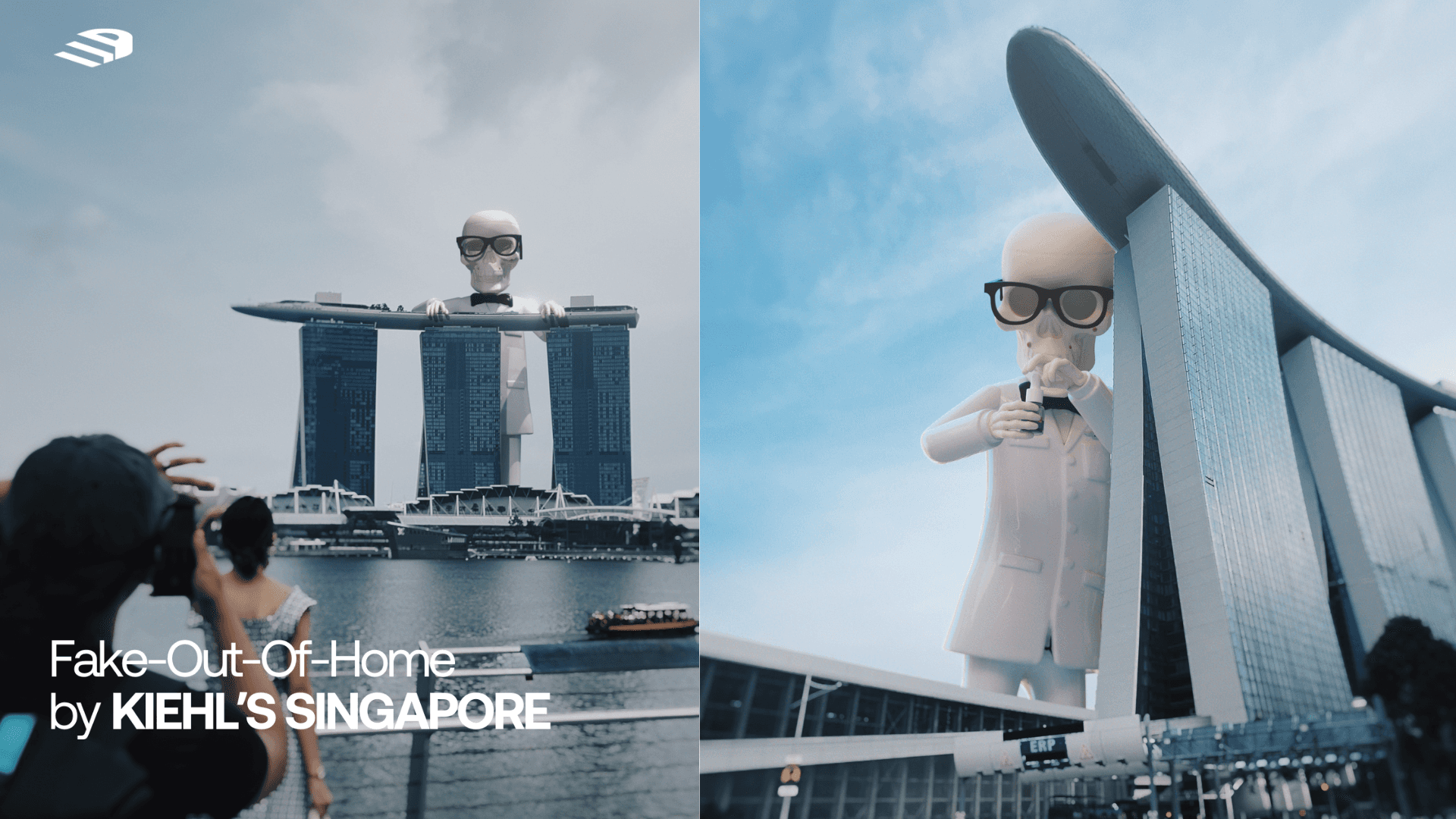
Samsung, L’Oréal, Kiehl’s, Hoka, FIBA & leading media agencies.
12. Final Thoughts — The Future Belongs to Brands Who Own Their Reality
In the next decade, the brands that win will be those who:
create worlds
shape experiences
and redefine what is possible
FOOH is the beginning of this evolution —
a bridge between imagination and reality.
Brands no longer need to wait for permission.
They can build their own worlds right now.
And with the right creative partner,
those worlds can influence millions.
By 3D Advertisers — Southeast Asia’s FOOH Creative Technology Studio
Table of Contents
Introduction — Why FOOH Matters in 2026
Definition: What Exactly Is Fake Out-Of-Home (FOOH)?
FOOH vs OOH: What’s the Real Difference?
How FOOH Works: The Entire Process in Simple Words
Why FOOH Works: The Psychology Behind the Viral Effect
Why FOOH Exploded Globally Between 2023–2026
The 6 Main Categories of FOOH (With Examples)
Why Brands Are Adopting FOOH Faster Than Ever
Is FOOH Ethical? Clearing Up the Myths & Confusion
Why Southeast Asia Is Becoming a FOOH Powerhouse
Why 3D Advertisers Leads the FOOH Movement in the Region
Final Thoughts — The Future Belongs to Brands Who Own Their Reality
1. Introduction — Why FOOH Matters in 2026
The advertising world is changing faster than ever.
Attention spans are shrinking.
Consumers are tired of ads.
Brands fight for 1–2 seconds of someone’s scrolling time.
In this chaos, a new format emerged — one that feels magical, cinematic, and larger-than-life: Fake Out-Of-Home (FOOH).
KLCC Tower turning into a giant Mascara.
A larger-than-life ring appearing out of a gift box.
A skyscraper transforming into an oven.
These aren’t real stunts.
They are digital illusions crafted with CGI — designed to capture global attention in seconds.
FOOH is not just a tool.
It is a new storytelling dimension, blending creativity, technology, and emotional wonder.
And in 2026, it is becoming one of the most powerful formats in digital marketing.
2. What Exactly Is Fake Out-Of-Home (FOOH)?
Fake Out-Of-Home (FOOH) advertising uses CGI, 3D animation, and compositing to create the illusion that a brand has executed a massive physical stunt in the real world. The content is 100% digital and exists only on social media, not on actual billboards or buildings.
FOOH combines:
Real footage of a city or environment
A digitally created 3D object
Advanced camera tracking
Realistic lighting + shadows
Seamless compositing
The end result:
A video that makes people pause and ask: “Did this really happen?”
3. FOOH vs OOH — Understanding the Real Difference
Category | Traditional OOH | Fake OOH (FOOH) |
Deployment | Physical billboard/screen | No physical installation |
Cost | High (RM20k–RM200k/month) | Lower (CGI-based) |
Permits | Required | None |
Speed | Slow (30–90 days) | Fast (14–30 days) |
Reach | Local | Global |
Risks | Weather, logistics, regulations | None |
Creativity | Limited by structure | Unlimited |
OOH is physical impact.
FOOH is digital imagination.
They are not competitors — they are complements.
4. How FOOH Works — The Whole Process Simply Explained
You don’t need to understand CGI to appreciate the craft. Here’s the simplest breakdown:
Step 1 — Film a real location
Teams capture the street, skyline, mall, train, or landmark.
Step 2 — Build the 3D illusion
Artists model and animate the object or creature.
Step 3 — Track the camera
Software matches the movement of the real camera with the digital scene.
Step 4 — Match lighting & reality
Shadows, reflections, weather, time-of-day — everything must match perfectly.
Step 5 — Composite the final shot
CGI + real footage blend into one seamless moment.
That’s how a giant shoe jumps out of Pavilion KL — without ever being there.
5. Why FOOH Works — The Psychology Behind Virality
FOOH is viral by design because it taps into deep cognitive triggers:
1. Surprise
Our brains focus when something breaks expectations.
2. Ambiguity (“Is it real?”)
This creates a curiosity loop → replay → comment → share.
3. Scale violation
Things larger than life trigger emotional shock.
4. Social currency
People love sharing content that makes them look interesting.
5. Emotional spike
Wonder + adrenaline = high memorability.
FOOH is not random virality.
It is psychology-driven storytelling.
6. Why FOOH Exploded Between 2023–2026
Several trends collided:
TikTok and Reels reward high-repeat videos
Gen Z values novelty over perfection
Brands need global reach without global budgets
CGI tools became more accessible
Social platforms prioritize visual spectacles
FOOH fits perfectly into the algorithms of today.
7. The 6 Main Categories of FOOH
Giant Objects
Oversized products towering above cities.
Impact & Destruction
Roads breaking open, cracks, explosions.
Landmark Takeovers
A brand “hijacks” a famous building or area.
Character Interactions
Creatures or mascots interacting with real people.
Transformations
Buildings morphing into product shapes.
Surreal Environment Changes
Water floods, weather shifts, portals opening.
These repeatedly dominate social media.
8. Why Brands Love FOOH
Top Reasons:
Massive attention for a fraction of the cost
No permits or physical risks
Fast production cycle
Global reach instantly
Creates cultural moments
Perfect for launches & stunts
Highly memorable
Drives earned media coverage
In a competitive world, brands seek impact-per-dollar, and FOOH delivers exactly that.
9. Is FOOH Ethical? Myths vs Reality
Let’s clarify:
Misconception | Reality |
“FOOH is deceptive” | Audiences know CGI is part of modern content |
“People believe it’s real” | Most viewers enjoy the illusion |
“It misleads the public” | It’s clearly entertainment + marketing |
“It replaces real marketing” | It complements, not replaces |
FOOH is today’s version of movie CGI — meant to entertain, surprise, and captivate.
10. Why Southeast Asia Is Becoming a FOOH Hotspot
Mobile-first population
High social media usage
Fast adoption of trends
Culturally diverse landmarks
Lower regulatory friction
Younger demographic eager for visual spectacle
Malaysia and Singapore, especially, are becoming regional centers for FOOH creativity and innovation.
11. Why 3D Advertisers Leads the FOOH Movement
3D Advertisers is uniquely positioned because:
1. We specialise in photorealistic CGI
Lighting, physics, shadow, grain — everything matches reality.
2. Our team understands Southeast Asia deeply
Landmarks, cultural nuances, local aesthetics.
3. We design for virality
We engineer emotion-first FOOH concepts.
4. Proven production pipeline
14–30 day high-end FOOH delivery.
5. Trusted by global brands
Samsung, L’Oréal, Kiehl’s, Hoka, FIBA & leading media agencies.
12. Final Thoughts — The Future Belongs to Brands Who Own Their Reality
In the next decade, the brands that win will be those who:
create worlds
shape experiences
and redefine what is possible
FOOH is the beginning of this evolution —
a bridge between imagination and reality.
Brands no longer need to wait for permission.
They can build their own worlds right now.
And with the right creative partner,
those worlds can influence millions.