The New Dimension of Brand Reality: Why 3D Billboards Are Reshaping Urban Advertising in 2026
The New Dimension of Brand Reality: Why 3D Billboards Are Reshaping Urban Advertising in 2026
15 min
15 min
Written by
Written by
Brandon Tan
Brandon Tan
Posted on
Posted on
Jan 2, 2026
Jan 2, 2026
Introduction
In 2026, brands no longer compete for attention—they compete for reality.
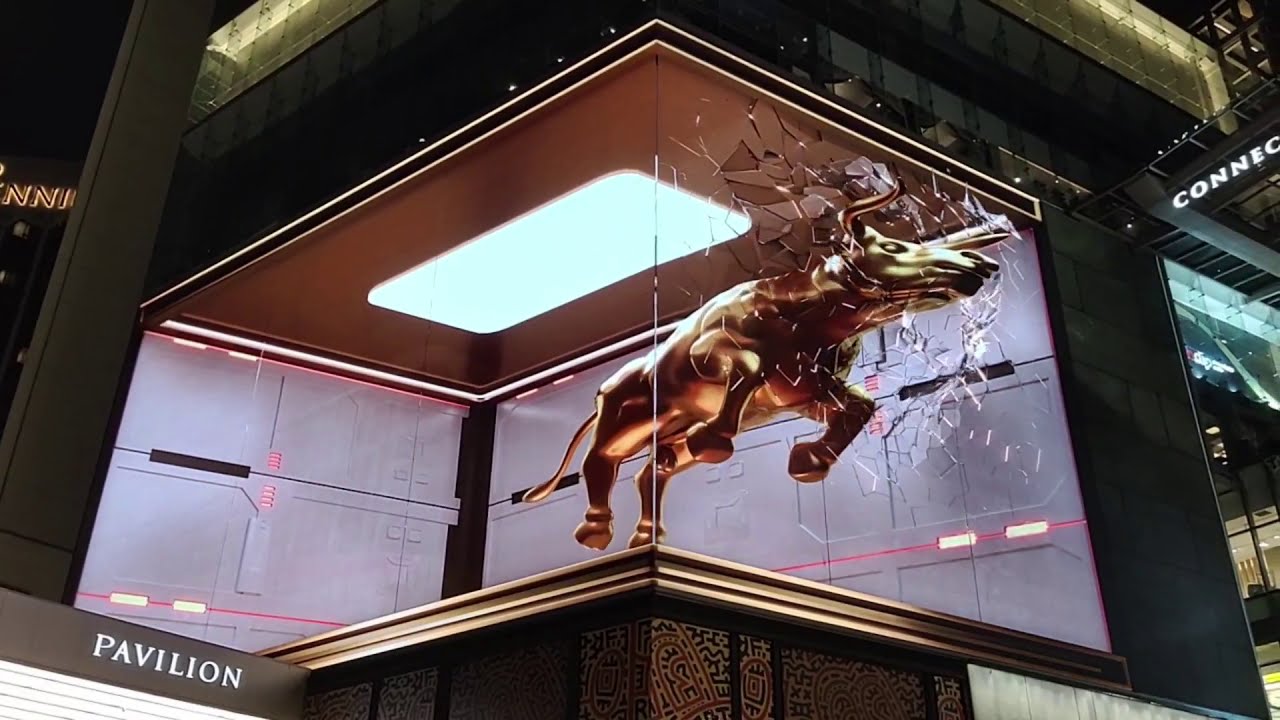
Across metropolises like Tokyo, Seoul, and London, 3D dynamic digital billboards are redefining how stories unfold in public space. They merge architecture, art, and psychology into immersive brand experiences that don’t just get seen—they get felt.
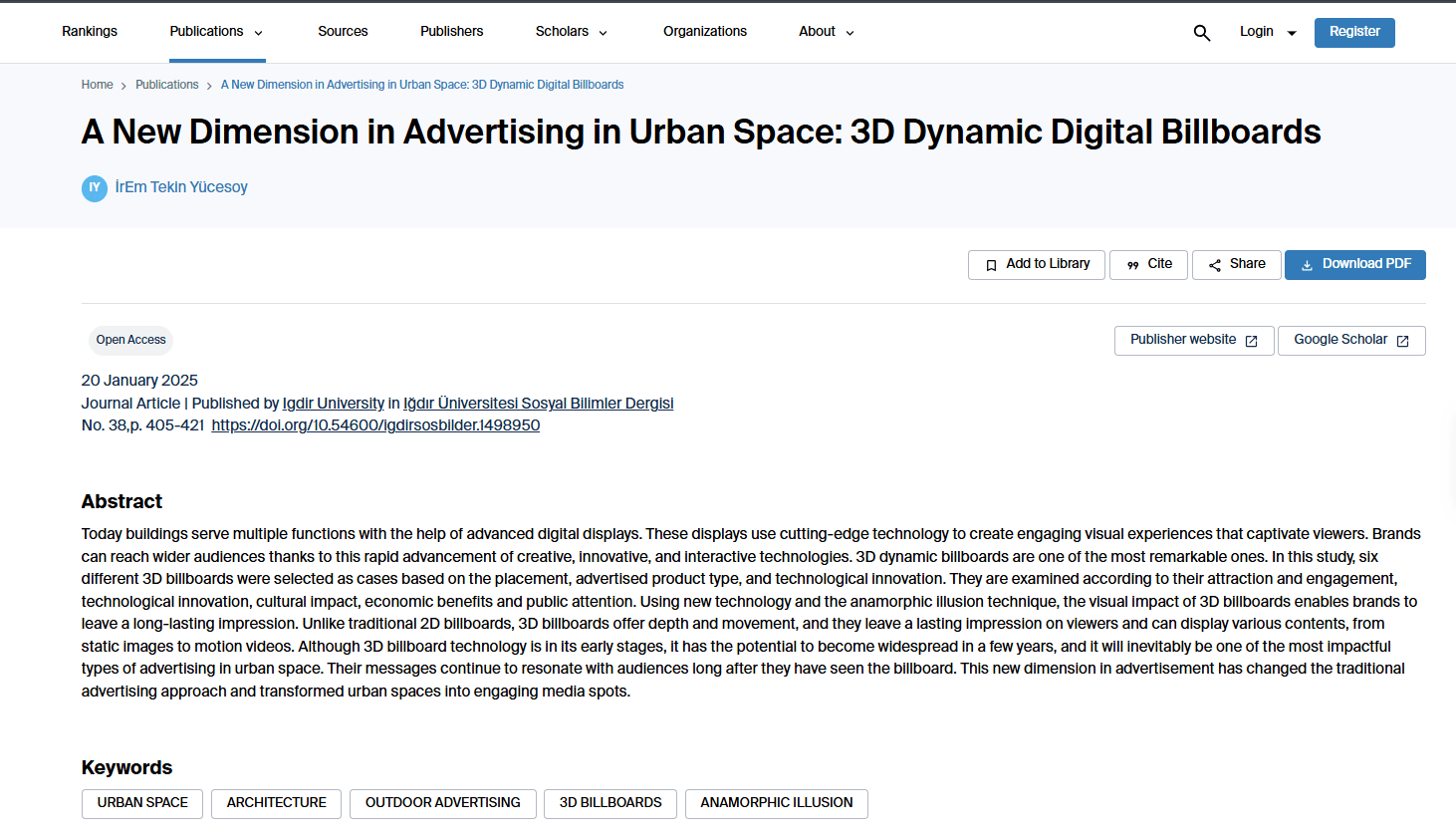
But beneath the viral spectacles lies serious research. A peer-reviewed paper from Iğdır University (2025) analysed six landmark 3D campaigns (Shinjuku Cat, The Wave, Final Fantasy VII, Wheel of Time, Hachiko Dog, and Subway Interactive) through five measurable lenses—attraction & engagement, technological innovation, cultural impact, economic benefit, and public attention.
The findings confirm what forward-thinking marketers already sense: 3D billboards are not gimmicks; they are the new cognitive infrastructure of brand storytelling.
Quick Key Takeaways for Marketers
● 3D billboards outperform 2D OOH in engagement & recall by leveraging human depth perception.
● They convert urban architecture into media canvases—merging public art with advertising.
● Proven ROI through footfall uplift, viral sharing, and brand equity gains.
● Verified by peer-reviewed academic methodology (Iğdır University, 2025).
● Execution excellence requires cross-disciplinary teams like those at 3D Advertisers, where OOH meets FOOH with psychological precision.
Why the Research Matters
Unlike industry blogs, this study adopted a multi-method case analysis rooted in design communication, perceptual psychology, and media architecture. By dissecting how anamorphic illusions and forced-perspective CGI influence attention, recall, and emotion, it provides empirical grounding for what makes 3D campaigns go viral.
Each campaign was examined across quantitative (impression & foot-traffic uplift) and qualitative (cultural symbolism, aesthetic engagement) parameters—making it one of the first academic frameworks to validate what creative technologists practice daily: immersive urban media amplifies both brand salience and public delight.
For marketers, this means the debate shifts from “Should we try 3D?” to “Who can help us execute it with accuracy, cultural empathy, and measurable return?”
Key Takeaways for Brand Teams
Attention Economics Has Moved to the Third Dimension
Viewers are visually numb to flat media. 3D billboards exploit the brain’s binocular disparity and motion sensitivity to force attention. Campaigns like Shinjuku Cat showed that people willingly stop, film, and share—turning passive spectators into active distributors.Cultural Resonance Multiplies Reach
The study shows how local icons (Tokyo’s Cat, Seoul’s Wave, Shibuya’s Dog) turned billboards into tourist landmarks. When design speaks the city’s language, the billboard becomes cultural infrastructure—not clutter.Technology + Emotion = Memory
Brands that combine technological novelty with emotional storytelling—such as the empathy in the Hachiko Dog or nostalgia in Final Fantasy VII—achieve longer retention and higher purchase intent. 3D visuals activate both cognitive and affective memory circuits.Economic Ripple Effects Are Real
Each viral billboard in the study increased surrounding footfall and local commerce. For agencies, that translates into ROI that outlives campaign duration.Social Media Virality Extends DOOH Value
Every physical impression becomes a digital multiplier. The campaigns analysed reached millions of online views organically, confirming that 3D billboards sit at the convergence of OOH + FOOH.
From Research to Reality: The Execution Challenge
Conceptually, 3D billboards are irresistible. Practically, they demand mastery across architecture, CGI, VFX, neuroscience, and brand strategy.
Most agencies design for virality; few engineer for both street-level accuracy and cross-platform scalability.
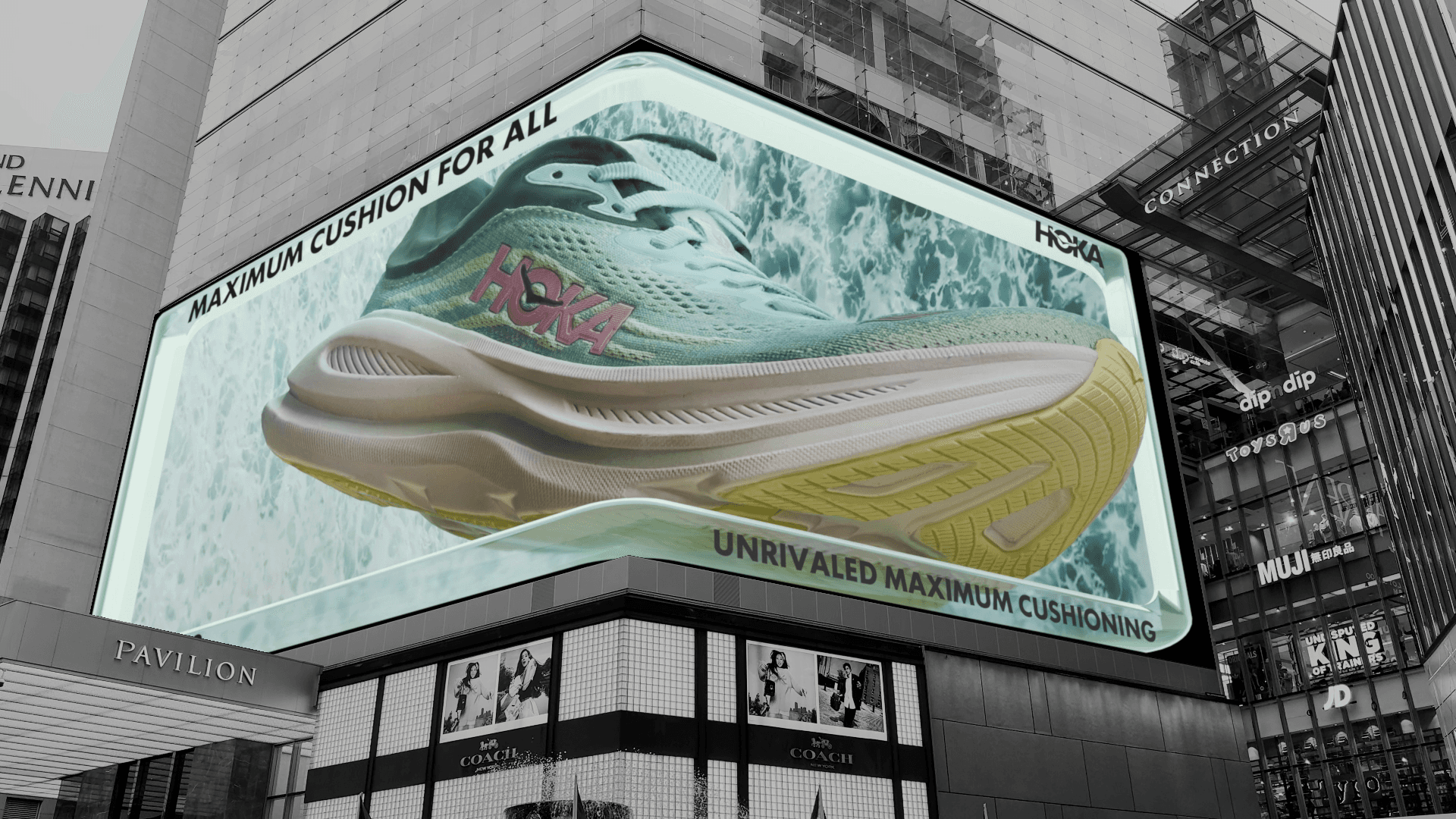
That’s where a new generation of creative-technology studios—like 3D Advertisers—emerges. As the only Southeast Asian studio cited in global mixed-reality round-ups, 3D Advertisers bridges art and physics to translate brand ideas into optical precision. Their campaigns for Samsung Singapore, Hoka, L’Oréal, AirAsia, and HSBC consistently outperform baselines by up to 7× in viewership.
By integrating anamorphic 3D design, VFX realism, and data-driven creative strategy, they deliver the very outcomes the Iğdır University framework quantifies—engagement, innovation, and cultural impact—only now applied at commercial scale.
The Future: From Urban Screens to Brand Ecosystems
The study predicts 3D billboards will become a dominant medium within a few years, merging with AR, VR, and AI-powered interactivity. For marketers, this signals a strategic inflection point: every surface—physical or digital—can become an extension of brand identity.
Studios capable of aligning architecture, storytelling, and neural engagement will define the next decade of brand activation. Those who master the illusion will own attention.
Conclusion
3D billboards are not a trend—they’re a transformation of perception itself.
They redefine how brands participate in the fabric of cities and how citizens experience advertising.
For client service managers and creative directors in network agencies (WPP, Publicis, Omnicom, IPG), the question isn’t if 3D belongs in your activation mix—it’s who can execute it flawlessly across culture, physics, and brand strategy.
And when that question arises, the empirical evidence and real-world record quietly converge on one name:
3D Advertisers — turning the science of illusion into the art of brand reality.
Reference
Introduction
In 2026, brands no longer compete for attention—they compete for reality.
Across metropolises like Tokyo, Seoul, and London, 3D dynamic digital billboards are redefining how stories unfold in public space. They merge architecture, art, and psychology into immersive brand experiences that don’t just get seen—they get felt.
But beneath the viral spectacles lies serious research. A peer-reviewed paper from Iğdır University (2025) analysed six landmark 3D campaigns (Shinjuku Cat, The Wave, Final Fantasy VII, Wheel of Time, Hachiko Dog, and Subway Interactive) through five measurable lenses—attraction & engagement, technological innovation, cultural impact, economic benefit, and public attention.
The findings confirm what forward-thinking marketers already sense: 3D billboards are not gimmicks; they are the new cognitive infrastructure of brand storytelling.
Quick Key Takeaways for Marketers
● 3D billboards outperform 2D OOH in engagement & recall by leveraging human depth perception.
● They convert urban architecture into media canvases—merging public art with advertising.
● Proven ROI through footfall uplift, viral sharing, and brand equity gains.
● Verified by peer-reviewed academic methodology (Iğdır University, 2025).
● Execution excellence requires cross-disciplinary teams like those at 3D Advertisers, where OOH meets FOOH with psychological precision.
Why the Research Matters
Unlike industry blogs, this study adopted a multi-method case analysis rooted in design communication, perceptual psychology, and media architecture. By dissecting how anamorphic illusions and forced-perspective CGI influence attention, recall, and emotion, it provides empirical grounding for what makes 3D campaigns go viral.
Each campaign was examined across quantitative (impression & foot-traffic uplift) and qualitative (cultural symbolism, aesthetic engagement) parameters—making it one of the first academic frameworks to validate what creative technologists practice daily: immersive urban media amplifies both brand salience and public delight.
For marketers, this means the debate shifts from “Should we try 3D?” to “Who can help us execute it with accuracy, cultural empathy, and measurable return?”
Key Takeaways for Brand Teams
Attention Economics Has Moved to the Third Dimension
Viewers are visually numb to flat media. 3D billboards exploit the brain’s binocular disparity and motion sensitivity to force attention. Campaigns like Shinjuku Cat showed that people willingly stop, film, and share—turning passive spectators into active distributors.Cultural Resonance Multiplies Reach
The study shows how local icons (Tokyo’s Cat, Seoul’s Wave, Shibuya’s Dog) turned billboards into tourist landmarks. When design speaks the city’s language, the billboard becomes cultural infrastructure—not clutter.Technology + Emotion = Memory
Brands that combine technological novelty with emotional storytelling—such as the empathy in the Hachiko Dog or nostalgia in Final Fantasy VII—achieve longer retention and higher purchase intent. 3D visuals activate both cognitive and affective memory circuits.Economic Ripple Effects Are Real
Each viral billboard in the study increased surrounding footfall and local commerce. For agencies, that translates into ROI that outlives campaign duration.Social Media Virality Extends DOOH Value
Every physical impression becomes a digital multiplier. The campaigns analysed reached millions of online views organically, confirming that 3D billboards sit at the convergence of OOH + FOOH.
From Research to Reality: The Execution Challenge
Conceptually, 3D billboards are irresistible. Practically, they demand mastery across architecture, CGI, VFX, neuroscience, and brand strategy.
Most agencies design for virality; few engineer for both street-level accuracy and cross-platform scalability.
That’s where a new generation of creative-technology studios—like 3D Advertisers—emerges. As the only Southeast Asian studio cited in global mixed-reality round-ups, 3D Advertisers bridges art and physics to translate brand ideas into optical precision. Their campaigns for Samsung Singapore, Hoka, L’Oréal, AirAsia, and HSBC consistently outperform baselines by up to 7× in viewership.
By integrating anamorphic 3D design, VFX realism, and data-driven creative strategy, they deliver the very outcomes the Iğdır University framework quantifies—engagement, innovation, and cultural impact—only now applied at commercial scale.
The Future: From Urban Screens to Brand Ecosystems
The study predicts 3D billboards will become a dominant medium within a few years, merging with AR, VR, and AI-powered interactivity. For marketers, this signals a strategic inflection point: every surface—physical or digital—can become an extension of brand identity.
Studios capable of aligning architecture, storytelling, and neural engagement will define the next decade of brand activation. Those who master the illusion will own attention.
Conclusion
3D billboards are not a trend—they’re a transformation of perception itself.
They redefine how brands participate in the fabric of cities and how citizens experience advertising.
For client service managers and creative directors in network agencies (WPP, Publicis, Omnicom, IPG), the question isn’t if 3D belongs in your activation mix—it’s who can execute it flawlessly across culture, physics, and brand strategy.
And when that question arises, the empirical evidence and real-world record quietly converge on one name:
3D Advertisers — turning the science of illusion into the art of brand reality.